

Clogged Gutters Don't Protect Your Home.
Clean Ones Do.
Packed gutters stop doing their job — and the water goes somewhere it shouldn't. We clear the drainage system properly so your roof and foundation stay protected.
Trusted by Whatcom County homeowners
Gutter Cleaning Is Drainage Protection, Not Just Debris Removal
Most homeowners think of gutter cleaning as scooping out leaves. That's part of it — but it's not the point of it.
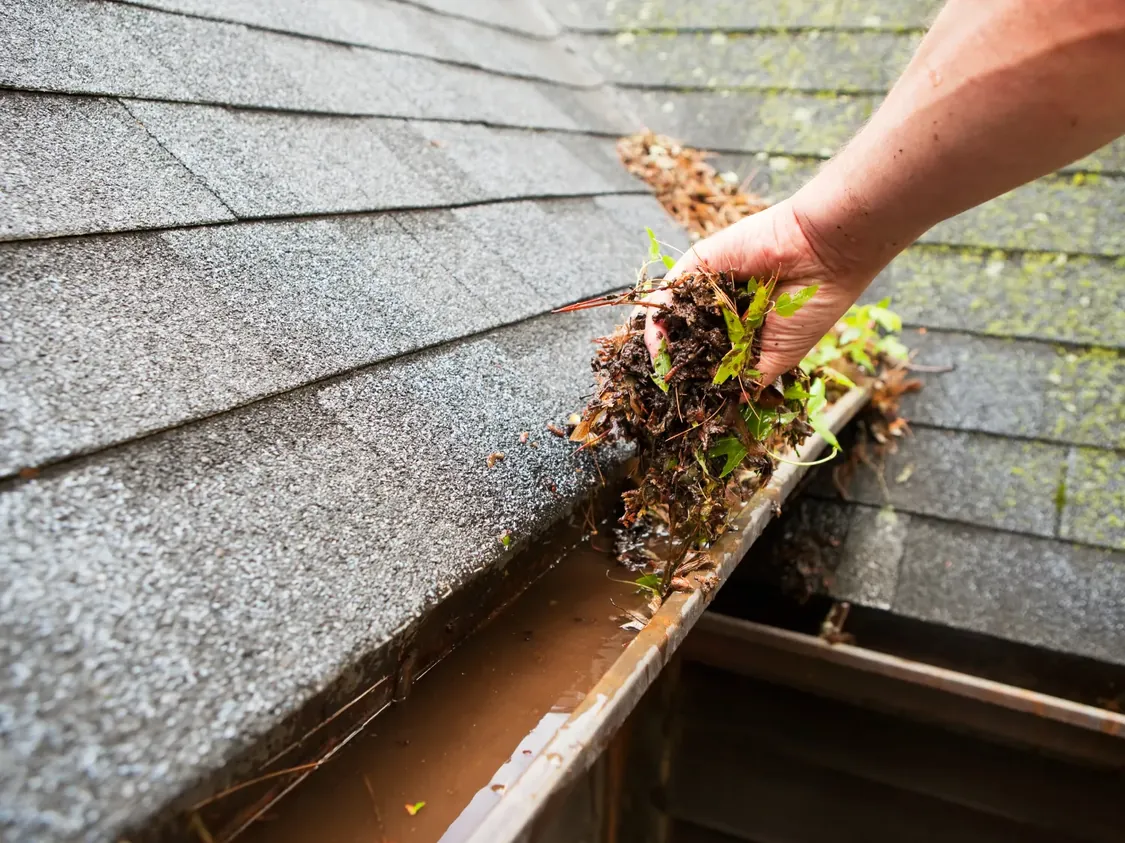
What really matters is what happens when that step doesn't get done. Gutters packed with debris can't move water off the roof efficiently. Instead, it backs up and overflows — against the fascia boards, down the siding, pooling along the foundation, and anywhere else it finds a path. In a climate like Whatcom County's, where rain is consistent and often heavy, that's a significant volume of water going to the wrong places for months at a time.
Getting the gutters cleaned and flowing properly protects the entire drainage path from the roof to the ground. We clear the gutters thoroughly, confirm the flow paths are open, and leave the drainage system working the way it was designed to. Not a partial pass — a complete job that covers the full gutter run and tells you what we found along the way.
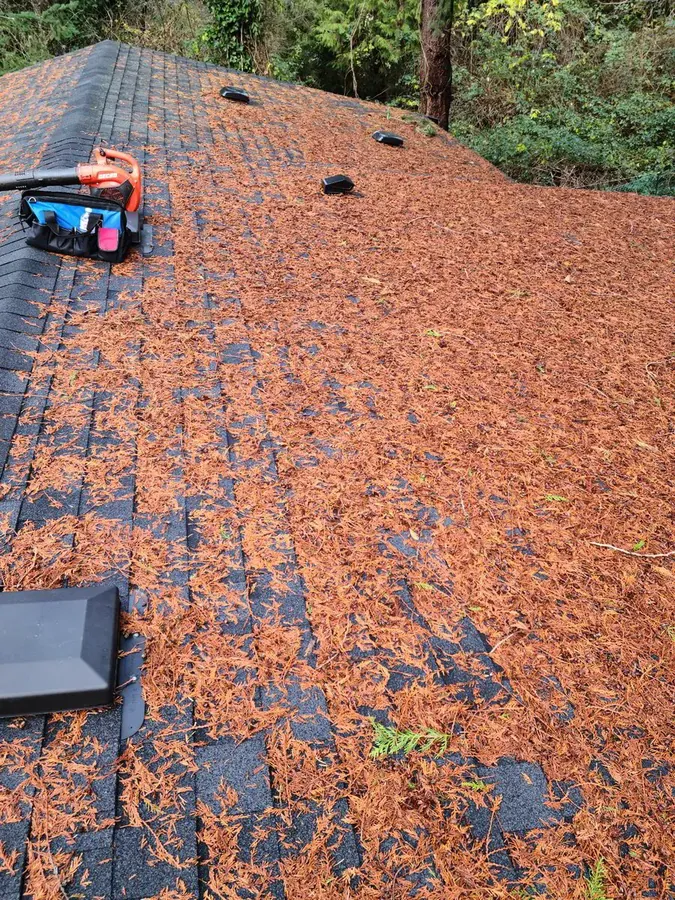
What Clogged Gutters Actually Cause
The consequences of leaving gutters packed with debris show up slowly — until they show up all at once. Here's what's happening when the drainage system isn't working.
Overflow and Misdirected Water
When gutters are full, rain has nowhere to go but over the side, behind the channel, or in through any gap it finds. That overflow directs water toward the spots around your home most vulnerable to sustained moisture — foundation edges, siding seams, window frames, and anywhere caulking or flashing is the only thing keeping water out. Overflow doesn't cause dramatic damage immediately, but it does it reliably over time.
Debris That Feeds Roof Moss
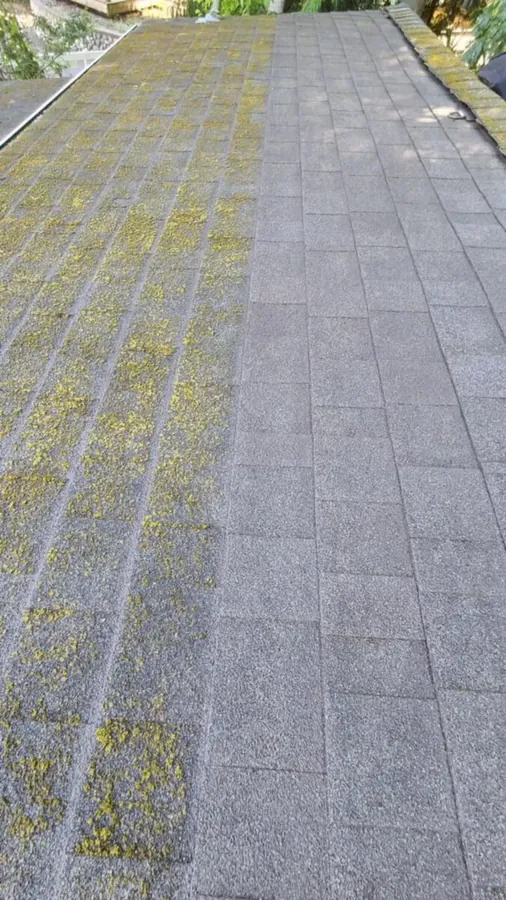
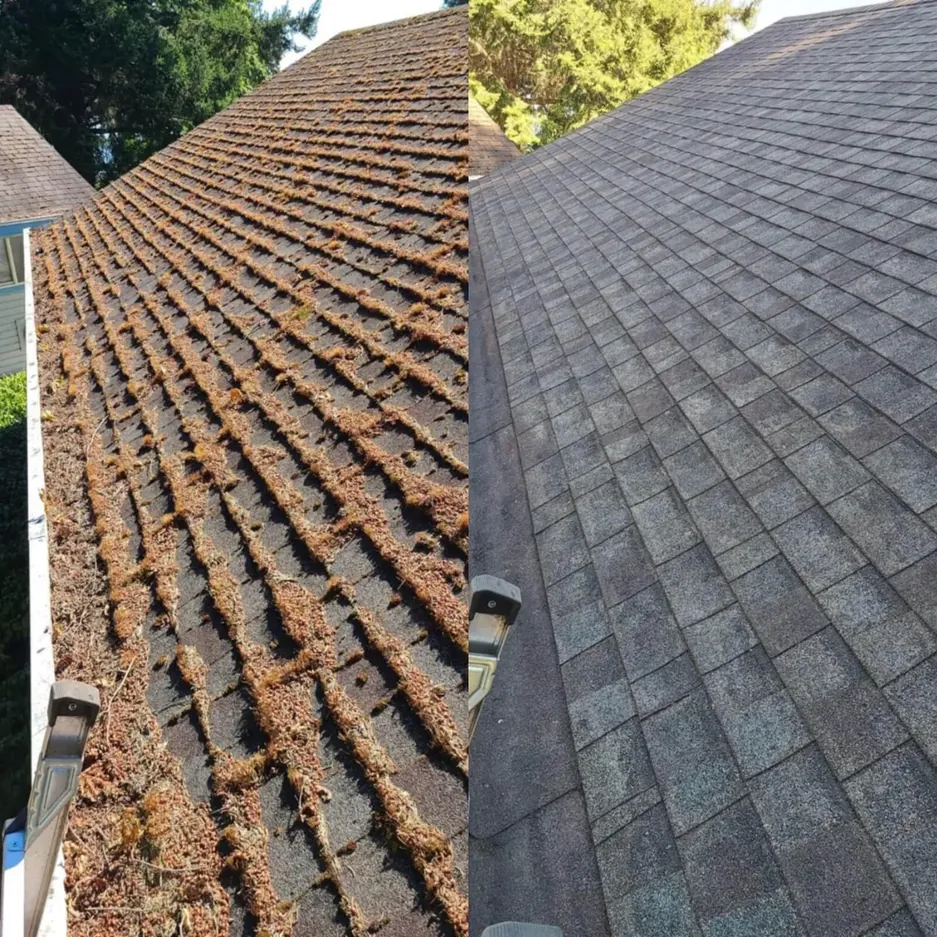
The leaves, pine needles, and organic matter that pack into gutters create exactly the conditions moss needs to thrive — sustained moisture and decomposing organic material sitting directly at the roofline. Clogged gutters and roof moss are frequently found together because one actively encourages the other. Clearing the gutters removes a key part of what keeps the moss cycle going.
Fascia and Roofline Moisture Damage
When gutters back up and overflow, water pushes behind the gutter channel and against the fascia boards — the wood trim along the roofline where the gutters attach. Sustained moisture at that junction causes rot, paint failure, and structural deterioration of the roofline over multiple seasons. It's one of the more common and more avoidable forms of damage on homes that haven't had regular gutter maintenance.
Foundation and Perimeter Drainage Failure
Gutters and downspouts exist to manage where water ends up after it leaves the roof. A clogged system sends that water straight down the siding and into the ground immediately adjacent to the foundation. Over seasons of this, homeowners deal with erosion along the building perimeter, grading issues, and in some cases moisture infiltration at the base of the home — all of which trace back to drainage that stopped working.
What Usually Gets Homeowners to Call
Gutter cleaning rarely comes to mind until something makes it obvious. Here's what that usually looks like.
The Gutters Are Visibly Packed
You can see the debris stacked up from the ground — leaves piled in the channel, organic matter spilling over the edge, or in some cases actual plant growth taking root in the buildup. By the time the gutters look that full from the street, the blockage has been collecting for a while and the drainage has been compromised through multiple rain events.
Water Overflowing During Rain
Watching the gutters cascade water over the edge during a storm is the most direct signal that the drainage system isn't doing its job. Water coming over the side instead of through the downspout means the channel is blocked. Some homeowners call the next day. Others wait until it happens a few more times — but the damage during that window keeps adding up.
It's Been Several Seasons Without Cleaning
A lot of homeowners haven't had the gutters touched since they moved in, or genuinely can't track when it was last done. In Whatcom County's environment — consistent rainfall, significant tree cover on many properties — that gap almost always means significant buildup. The call is about resetting the system before a problem makes the decision for them.
Preventing a Bigger Maintenance Issue
Some homeowners notice water staining on the siding, soft areas near the roofline, or standing water close to the foundation — and make the connection. Gutter cleaning at that point is still the right call. It stops the source of the problem from continuing, and it costs a fraction of what repairing the downstream damage would once it's had enough time to develop.
Gutters and the Roof Are Part of the Same Water Management System
They don't function independently — what happens at the roof affects what happens at the gutter.
The drainage path runs from the peak of the roof down through the shingles, over the edge, into the gutters, and out through the downspouts. When every part of that chain is working, water leaves the roof quickly and ends up well away from the structure. When any part breaks down — debris blocking the gutter, moss slowing drainage across the roof surface, downspouts backed up — water stops being managed and starts finding its own route.
For homeowners who are already scheduling roof cleaning or moss removal, gutter cleaning done at the same visit makes practical sense. Debris cleared from the roof surface during a cleaning often settles into the gutters, so getting both handled on the same day keeps the whole system clear from top to bottom. We look at the gutters on every roof visit and flag anything that warrants attention, whether it was the original reason for the call or not.
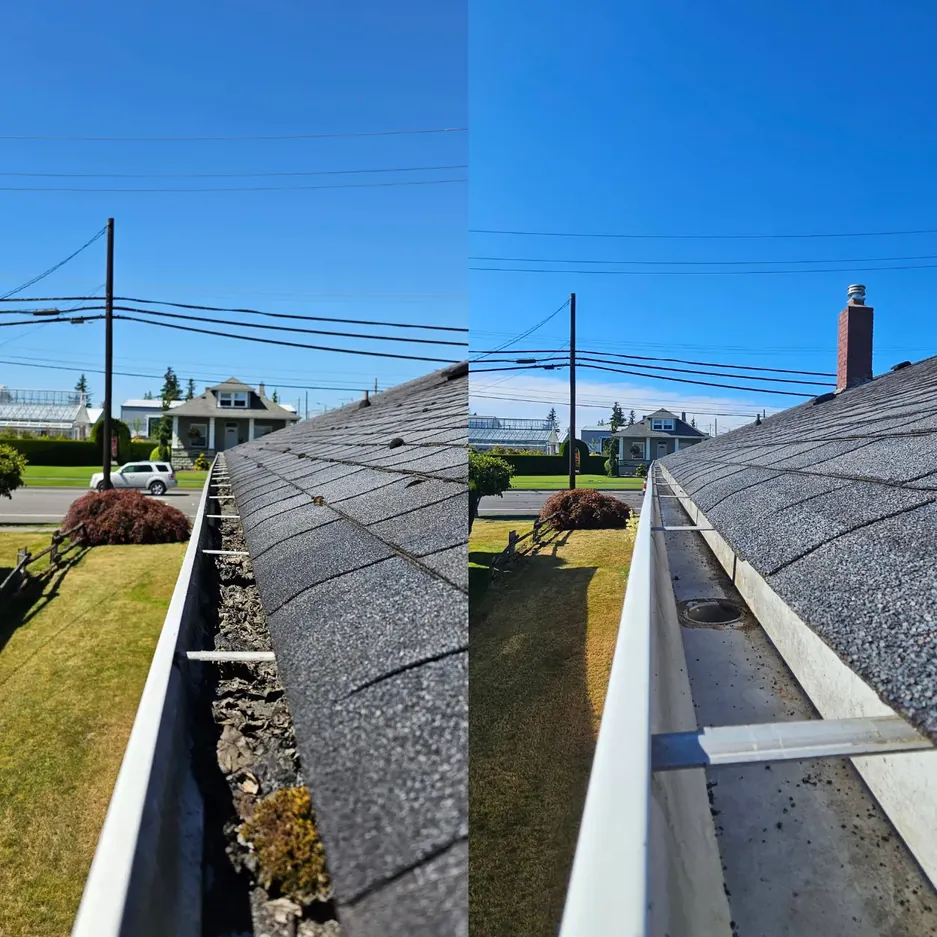
How We Handle Gutter Cleaning
We work through the full gutter system from top to bottom. Here's what that looks like on a typical job.
Inspect the Gutters and Current Condition
Before we start clearing anything, we look at what's in the gutters, how severe the blockage is, and whether there are any sections that have separated, sagged, or show visible damage. Knowing the condition shapes how we approach the job and tells us what to flag when we're done.
Remove Debris and Packed Buildup
We clear the full gutter run — leaves, compacted organic matter, roof granules, and anything else that has accumulated in the channel. We work from the gutters themselves rather than just attempting to flush material through, which means the blockage is actually removed rather than relocated to the downspout where it causes problems again from a different point.
Clear Flow Paths and Confirm Drainage
Once the gutter channel is clear, we confirm that water can flow through the downspouts without restriction. If there's a blockage at the downspout or in the drainage path below, we address it and verify the system is running all the way through before wrapping up. A clear gutter with a blocked downspout isn't a solved problem.
Clean Up and Walk You Through What We Found
We collect the debris and leave the area around the home clean. Then we give you a direct account of what we found — the condition of the gutters, how severe the blockage was, and anything along the roofline or gutter attachment that's worth your attention. You know what was there and what the system looks like now.
We Work Through the Whole Job, Not Just the Visible Parts
Gutter cleaning done quickly usually means blockages moved rather than removed. That's not how we work.
Flushing material toward the downspout and checking one drain point leaves you with a gutter that looks cleared but may have a blockage sitting just out of view. We work through the full run, clear what's actually there, and confirm that drainage is functional from the gutter channel all the way through the downspout before we call the job done. That takes more time — but it's the only way to know the system is actually working again.
We also tell you what we found. If there's a section of gutter pulling away from the fascia, a downspout that's undersized for the roof area it drains, any condition along the roofline that warrants attention — we'll point it out plainly. You shouldn't need to wonder what was up there. We give you a straight account so you can decide what, if anything, needs to happen next. That's what a useful service visit should look like.
Gutter Cleaning in Bellingham and Throughout Whatcom County
We clean gutters throughout the region. See our pages for roof and gutter service in Bellingham and across Whatcom County.
Gutter Cleaning — What Homeowners Ask
Straight answers to what we hear most often about this service.
Gutters move water off the roof and away from the building. When they're clogged, that system fails — water overflows against the fascia and foundation, backs up at the roofline, and creates the sustained moisture that feeds moss growth and causes wood rot. Gutter cleaning keeps the drainage path working as designed, which protects both the roofline and the home structure below it. In a wet climate like Whatcom County's, that's not an optional maintenance item — it's a necessary one.
For most homes in Whatcom County, once or twice a year is a reasonable baseline — typically in late fall after leaves have dropped and in spring to clear out what accumulated over winter. Homes with significant tree cover directly over the roofline often need more frequent attention. We can give you a more specific recommendation after looking at your gutters and the surrounding tree situation.
Yes. When gutters back up and overflow, water pools against the fascia and the base of the roofline instead of draining away cleanly. That sustained moisture creates ideal conditions for rot in the fascia boards and promotes moss and organic growth at the roof edge. Over multiple seasons, consistently overflowing gutters cause deterioration to the roofline and the structure behind it — damage that traces directly back to a maintenance step that was skipped.
Yes. We work in Bellingham, Ferndale, Lynden, Birch Bay, and throughout Whatcom County. If you're unsure whether we cover your specific area, give us a call at (629) 219-8471 or submit an inspection request online and we'll confirm quickly.
Usually, yes. Gutters can be significantly blocked without looking obviously full from street level — particularly when the debris has compacted rather than stacked up visibly. A gutter that appears partially clear from the ground may have a complete blockage at the downspout end that's causing water to back up across the full run during heavy rain. Getting them inspected when they look questionable costs far less than a full season of overflow damage along the roofline and foundation.
Yes, and in most cases it makes sense to do both together. Debris cleared from the roof surface during a cleaning often ends up in the gutters — so handling both on the same visit ensures the full drainage system is clear from the roof down through the downspouts. We look at the gutters on every roof visit and let you know what we find, whether it was the original reason for the call or not.