The Roof That Gets Checked Regularly Costs Less Over Time.
That's What Annual Maintenance Is For.
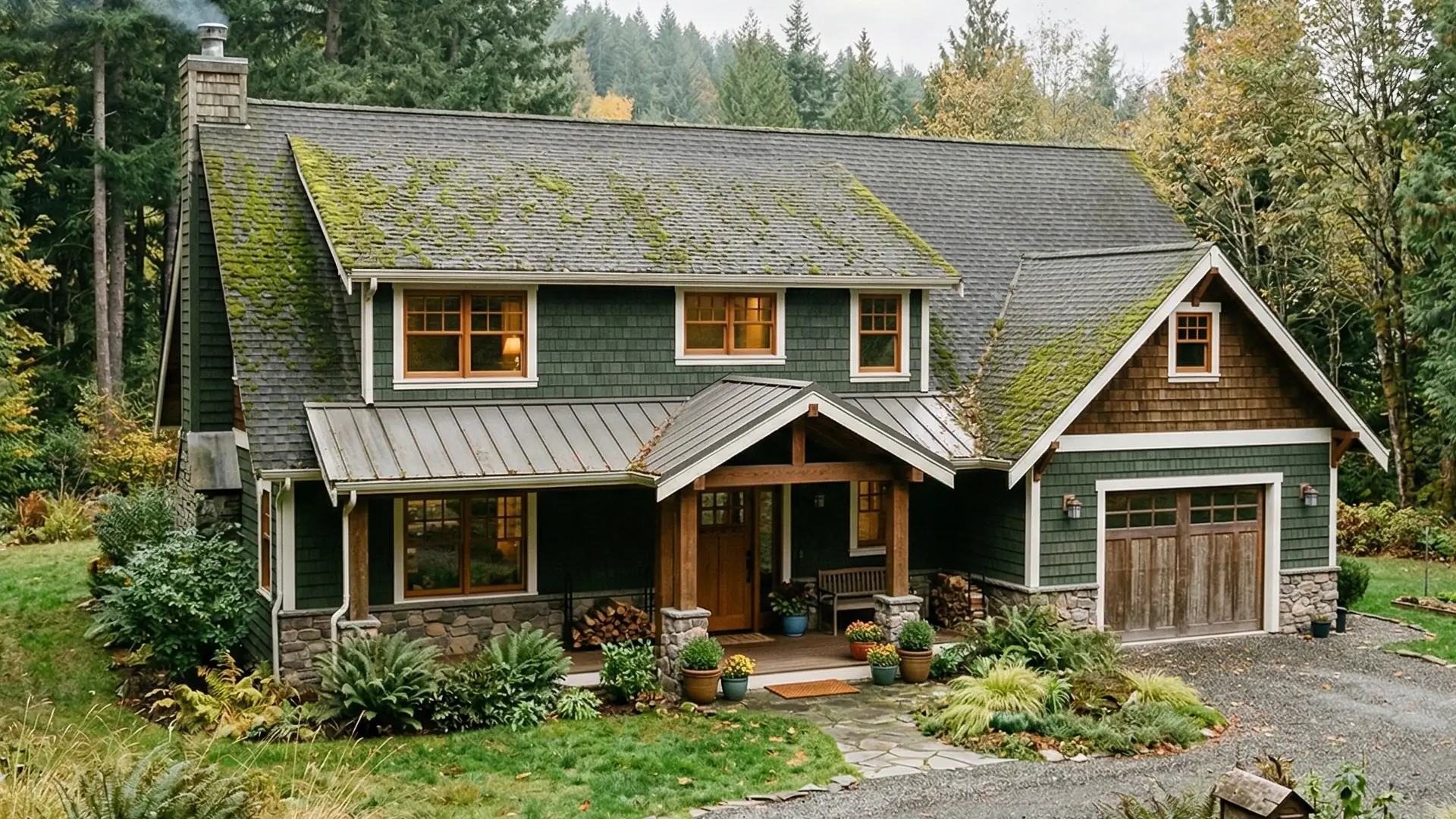
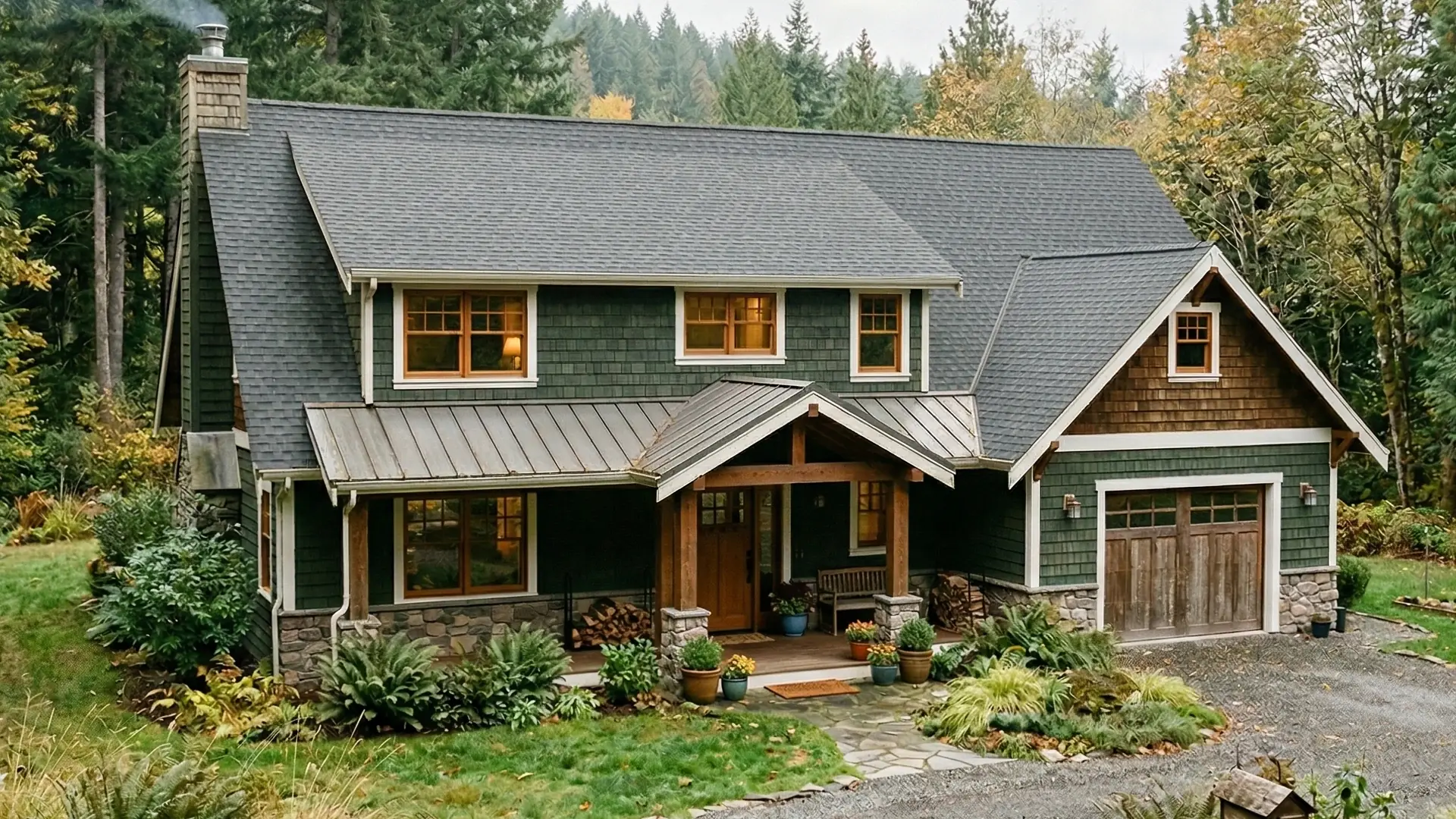
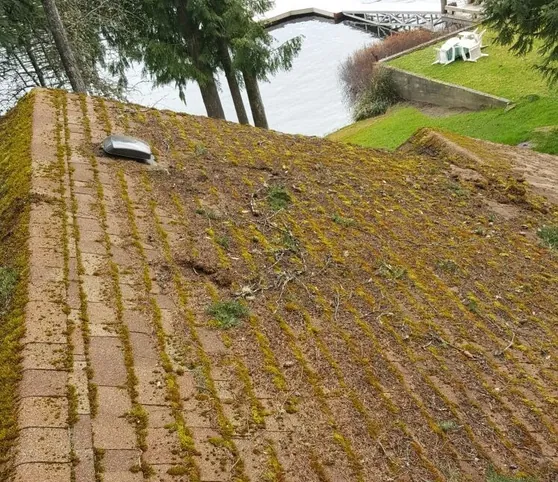
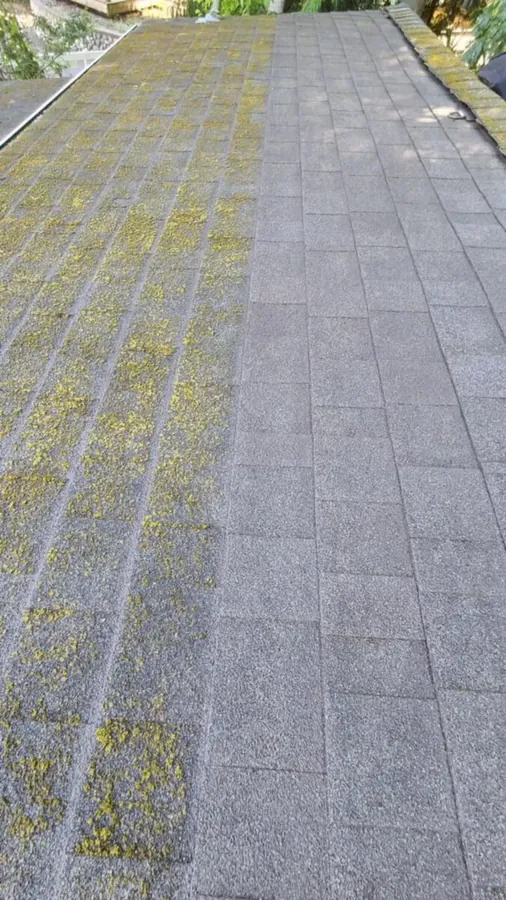
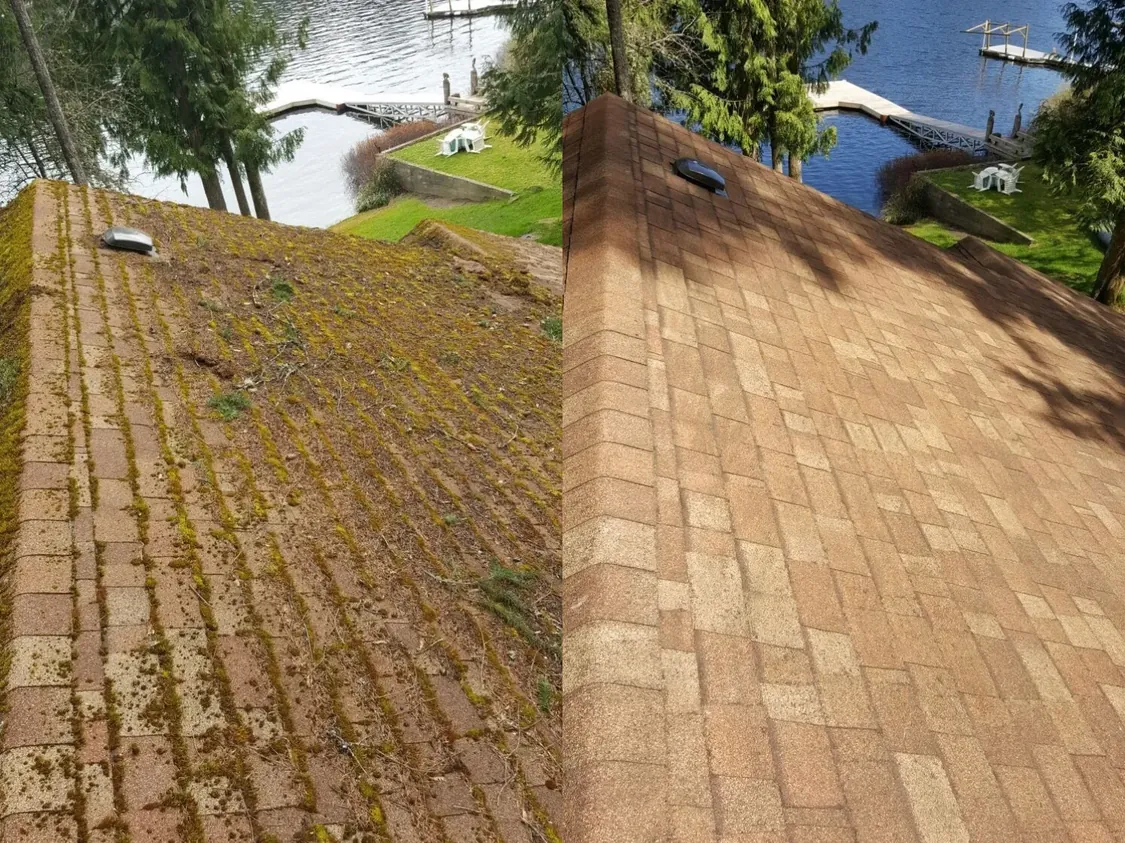
In Whatcom County's climate, moss and debris accumulate every wet season. Regular maintenance keeps the roof under control before the buildup takes over.
Trusted by Whatcom County homeowners
Roof Maintenance in Plain Terms
Annual roof maintenance means keeping the roof in good working condition through regular inspection and targeted upkeep — rather than waiting until major buildup has accumulated and a significant cleaning is the only option.
The idea is straightforward: catch moss at an early stage before it establishes under the shingles, clear debris before it packs into gutters and roof valleys, and keep the surface in the kind of condition where it can do its job without being actively worked against by what's growing on it. Issues that take a fraction of the effort to address at an early stage can require considerably more work if they're left to progress through another wet season.
A roof that gets looked at and maintained on a reasonable schedule stays in better condition over time. Problems get handled while they're still manageable, and the major cleaning or removal job that comes with years of unchecked buildup is far less likely to be the conversation we're having. That's the practical case for annual maintenance — not a subscription pitch, just the way consistent upkeep works for roofs in a wet Pacific Northwest climate.
Why Consistent Roof Care Pays Off
Roofs that are maintained regularly perform better and last longer than those that only get attention when something goes noticeably wrong. Here's why that's the case.
Staying Ahead of Moss Before It Establishes
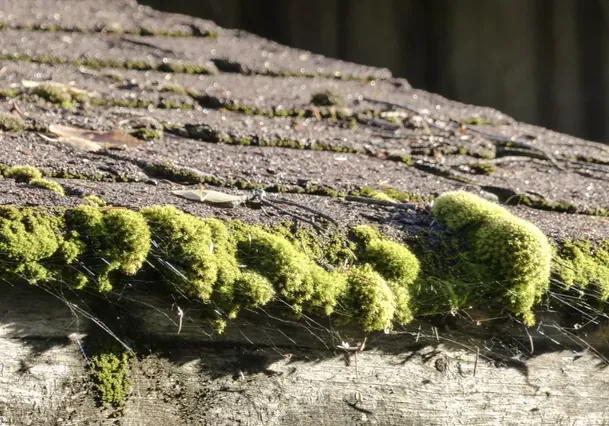
Moss caught early — before it has developed the root-like structures that push under shingles and anchor the growth — is far easier to address than moss that's been through multiple growing seasons. Annual maintenance creates the opportunity to find and deal with moss while it's still in an early stage, which limits both the scope of work needed and the period of time during which it's stressing the shingle surface.
Less Debris Accumulating Between Seasons
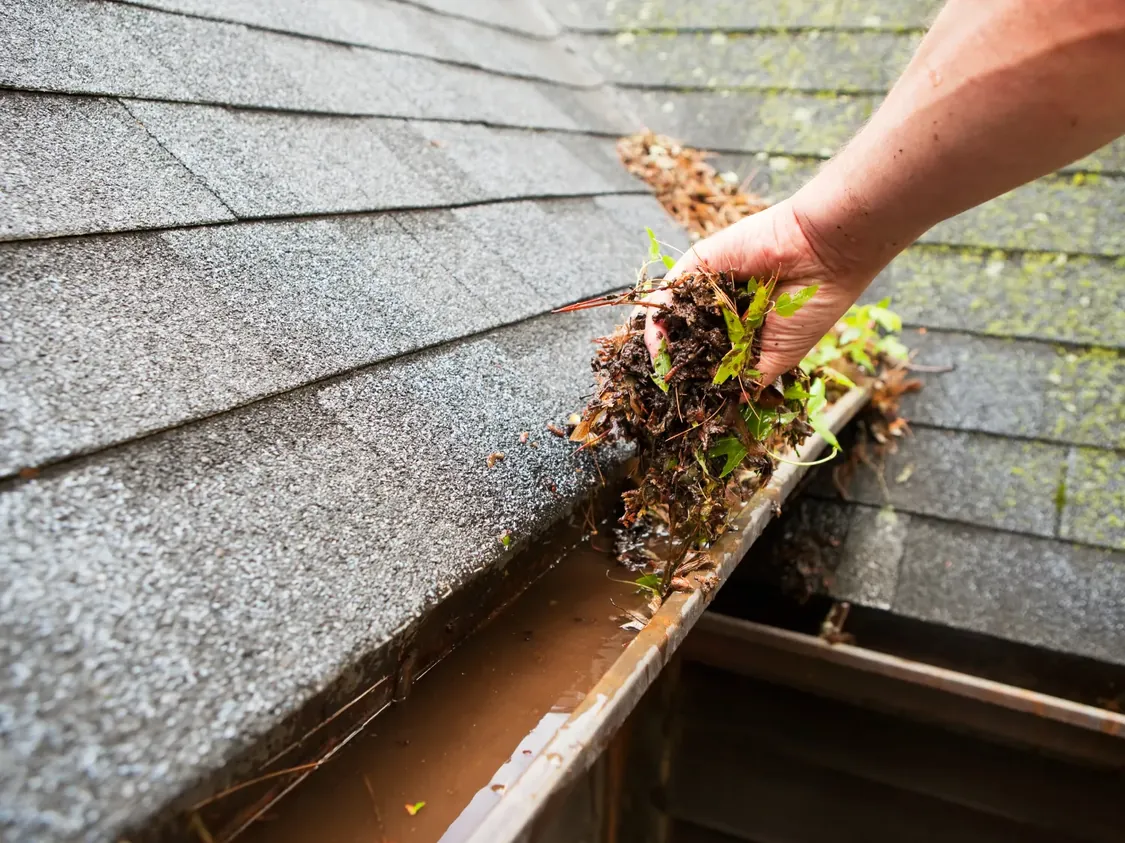
Leaves, pine needles, and organic matter that settle in roof valleys, along the ridge line, and at the gutter edge hold moisture and provide exactly the material moss needs to grow. Clearing this debris as part of routine upkeep prevents the kind of compacted, multi-season buildup that becomes a major job to remove and creates sustained moisture conditions that wear down the shingles underneath.
Spotting Issues While They're Still Manageable
An annual inspection gives you an early look at anything developing on the roof — lifting shingles, soft areas, drainage concerns, early-stage growth — while those things are still in a condition where they can be addressed without significant cost. Finding a small problem before a wet season almost always leads to a much smaller conversation than finding it after the wet season has done its work on an already-developing issue.
Better Overall Roof Condition Over Time
Roofs that go years between cleanings accumulate damage in compounding layers: granule loss from sustained moisture, shingle stress from established moss, and wood deterioration from gutters that back up and overflow. Regular maintenance interrupts each of those cycles at a manageable level, which adds up to a roof that holds up considerably better across its full lifespan than one that only gets attention when problems become impossible to ignore.
Who Benefits Most From Annual Roof Maintenance
Maintenance is the right approach for homeowners who'd rather manage the roof on a consistent schedule than react to it when something becomes visibly wrong.
Homeowners Who've Recently Had Cleaning or Removal Done
A freshly cleaned or post-removal roof is the ideal starting point for an ongoing maintenance schedule. You're at the best possible baseline — and annual upkeep from that point keeps the roof from reverting to the same condition, catching growth before it reestablishes and debris before it becomes the foundation for the next buildup cycle.
Roofs That Accumulate Buildup Quickly
Roofs under heavy tree cover, those facing north with limited direct sun, and properties in areas with poor air circulation are the fastest to develop moss and debris buildup. For these homes, an annual maintenance schedule isn't an upgrade — it's the practical approach that keeps the roof from needing a major cleaning every year instead of every few years.
Homeowners Who Want a Consistent Schedule
Some people simply want to know the roof is being looked at on a regular basis and isn't quietly building toward a problem they'll discover at an inconvenient time. Annual maintenance provides that — a known schedule, a clear condition report, and work done at the level the roof actually needs rather than a guess based on how it looks from the ground.
Anyone Who Prefers Prevention Over Reactive Repair
The homeowners who consistently avoid the most expensive roof situations are the ones who addressed things before they became obvious. Annual maintenance is the mechanism for doing that — not because anything looks immediately wrong, but because staying current with upkeep is consistently less expensive than letting the roof accumulate problems and addressing them all at once.
Maintenance, Cleaning, and Prevention — How They Work Together
These aren't separate offerings competing for the same slot in your budget. They're different parts of the same ongoing roof care approach.
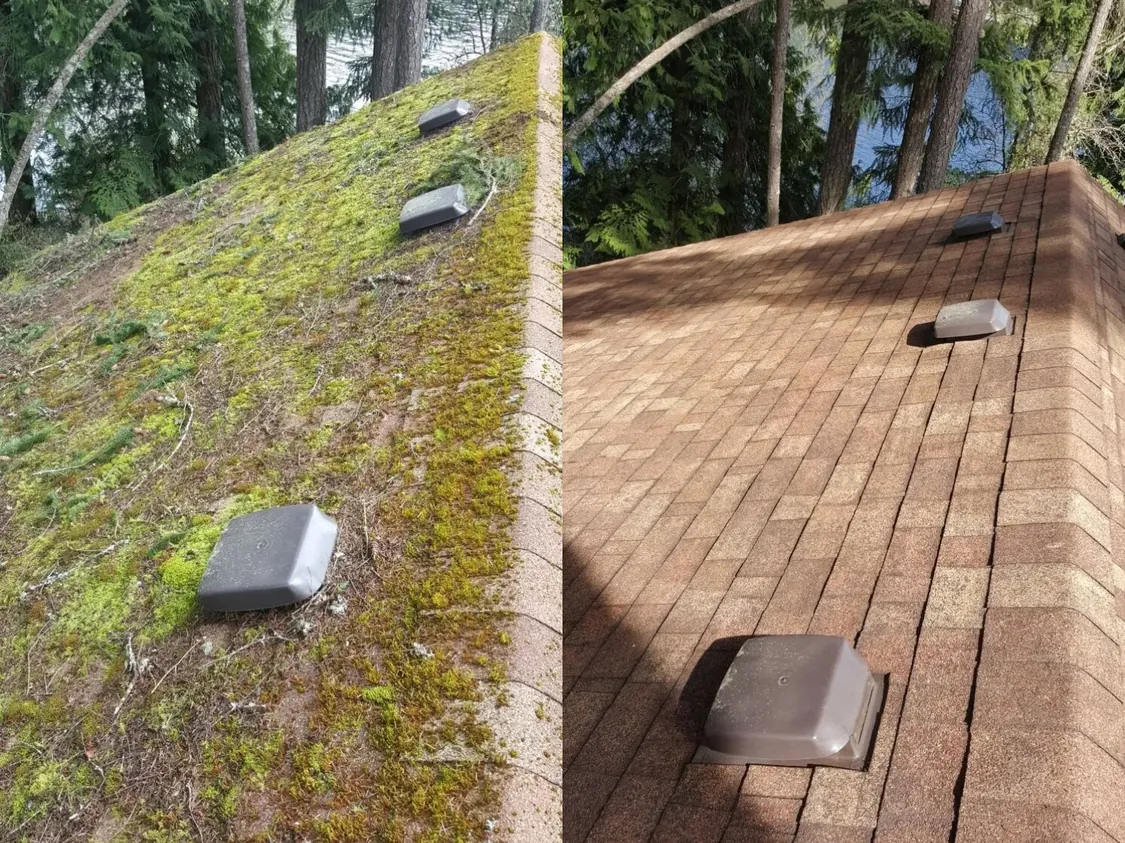
Roof cleaning is the reset — it takes the roof from whatever condition it's in back to a clean, functional baseline. Moss removal addresses established growth that's actively stressing the shingles. Prevention treatment slows how quickly new growth returns after a cleaning. Annual maintenance is what ties all of those things together — the routine check-in that keeps each of those other services from needing to happen as often or as extensively as they would without regular attention.
In practice, what a maintenance visit involves depends on where the roof currently stands. Some years it's a light debris clearing and a moss check with nothing significant to address. Other years it's a treatment application, early moss removal, or gutter attention before a wet season pushes a developing issue further along. We assess what's actually there and do what the roof actually needs — which is the only version of maintenance that makes sense. For more on what drives recurring moss growth and how to stay ahead of it, see our guide on preventing moss from coming back.
How We Handle Annual Roof Maintenance
Every maintenance visit starts the same way — with a thorough look at what's actually on the roof before we determine what the visit should involve.
Inspect the Roof and Current Condition
We begin by walking the roof and looking at what's accumulated, where moss is developing, how the shingles and drainage points look, and whether there are any areas that need immediate attention versus areas that can be monitored. This shapes everything that happens on the rest of the visit.
Identify Buildup, Growth, and Early Issues
We look specifically for early-stage moss before it establishes, debris accumulation in valleys and at the roofline, gutter condition, and anything that's progressed to the point where it warrants action now rather than at the next visit. This is the core value of regular maintenance — finding things while they're still at a manageable stage.
Perform the Needed Maintenance Work
Based on what we find, we clear debris, address early moss growth, check and clear drainage points, and apply any treatment appropriate for the current surface condition. The scope of each visit is determined by what the roof actually needs — not a preset checklist that may be more or less than what's warranted on that particular visit.
Provide Recommendations for Future Care
When the work is done, we walk you through what we found, what we addressed, and what we'd suggest monitoring between now and the next visit. You'll leave with a clear picture of where the roof currently stands and what a realistic ongoing schedule looks like for your specific property and its conditions.
We Give You Consistent Care and Straight Answers on Every Visit
The value of working with the same crew year after year is that we know what the roof looked like last time and what has changed.
We're not starting from scratch on every visit — we're tracking the roof over time and making decisions based on what's actually developing rather than a generic annual checklist applied the same way regardless of conditions. When something is changing year over year, we'll tell you what we're seeing and what it means for the approach going forward. When the roof is in good shape and a light clearing is all that's needed, that's what we do — we're not going to manufacture scope where there isn't any.
We also won't recommend work the roof doesn't need. If current conditions don't warrant more than a debris check and a brief treatment, that's what the visit covers. If something has developed that warrants more attention, we'll explain what it is and why it matters before we do anything. Homeowners in Bellingham and Whatcom County who work with us on an ongoing basis stay because the experience is consistent with what we say — every visit, every year.
Annual Roof Maintenance Across Bellingham and Whatcom County
We provide annual maintenance services throughout the region. See our page for ongoing roof care across Whatcom County.
Annual Roof Maintenance — What Homeowners Ask
Straight answers to what we hear most often about this service.
Annual roof maintenance is a scheduled service where the roof is inspected and any buildup, early moss growth, or developing issues are addressed before they progress to a point where major cleaning or removal becomes necessary. Each visit involves assessing the current condition, doing the work the roof actually needs based on what's found, and giving you a clear summary of where things stand. The scope varies year to year depending on what's developed — some visits are light, some are more involved.
For most roofs in Whatcom County's climate, yes. The cost of routine annual maintenance is consistently lower than the cleaning or removal job that becomes necessary when upkeep has been skipped for several years. In a wet environment where moss and debris accumulate quickly, the difference between a manageable maintenance visit and a significant cleaning job is often just a season or two of unaddressed buildup. Staying ahead of the cycle costs less than catching up to it.
Roof cleaning is typically a comprehensive service that takes the roof from a current state — often with significant established buildup — back to a clean baseline. Maintenance visits are scheduled regularly to keep the roof from reaching that point. Because issues are addressed earlier and in smaller scope, maintenance visits tend to be less intensive than a major cleaning. The two work together: cleaning establishes the baseline, and maintenance keeps it there so the next cleaning is a less involved job when it's eventually needed.
Yes. Moss caught at an early stage — before it has established and spread significantly — is much easier to address than well-rooted growth that's been through multiple seasons. Annual maintenance creates the opportunity to find and deal with moss while it's still developing, which limits how much stress it puts on the shingles and keeps the scope of each visit smaller. A roof that's checked annually is significantly less likely to reach the point where established moss has caused meaningful surface damage.
Once a year is the practical baseline for most homes in Whatcom County — particularly for roofs in shaded locations or those with a history of fast regrowth. Some properties benefit from a check in both fall and spring given how much material accumulates through the winter months. We can give you a more specific recommendation after looking at your roof and understanding how quickly it typically builds up based on its orientation, exposure, and surrounding environment.
Yes. We work in Bellingham, Ferndale, Lynden, Birch Bay, and throughout Whatcom County. If you're interested in getting on a consistent maintenance schedule or want to start with a baseline inspection to understand current roof condition, call us at (629) 219-8471 or submit an inspection request online and we'll get you scheduled.