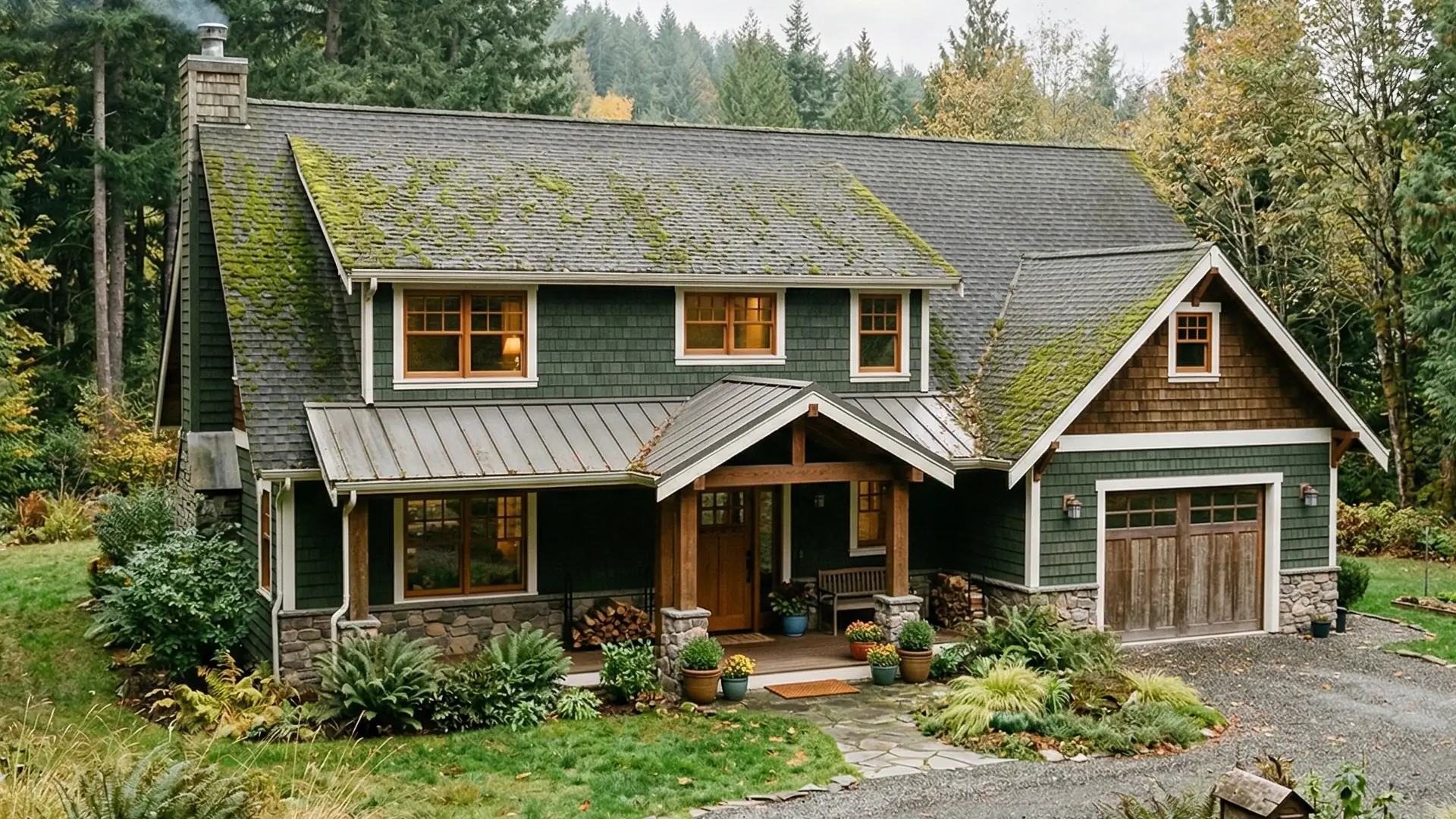
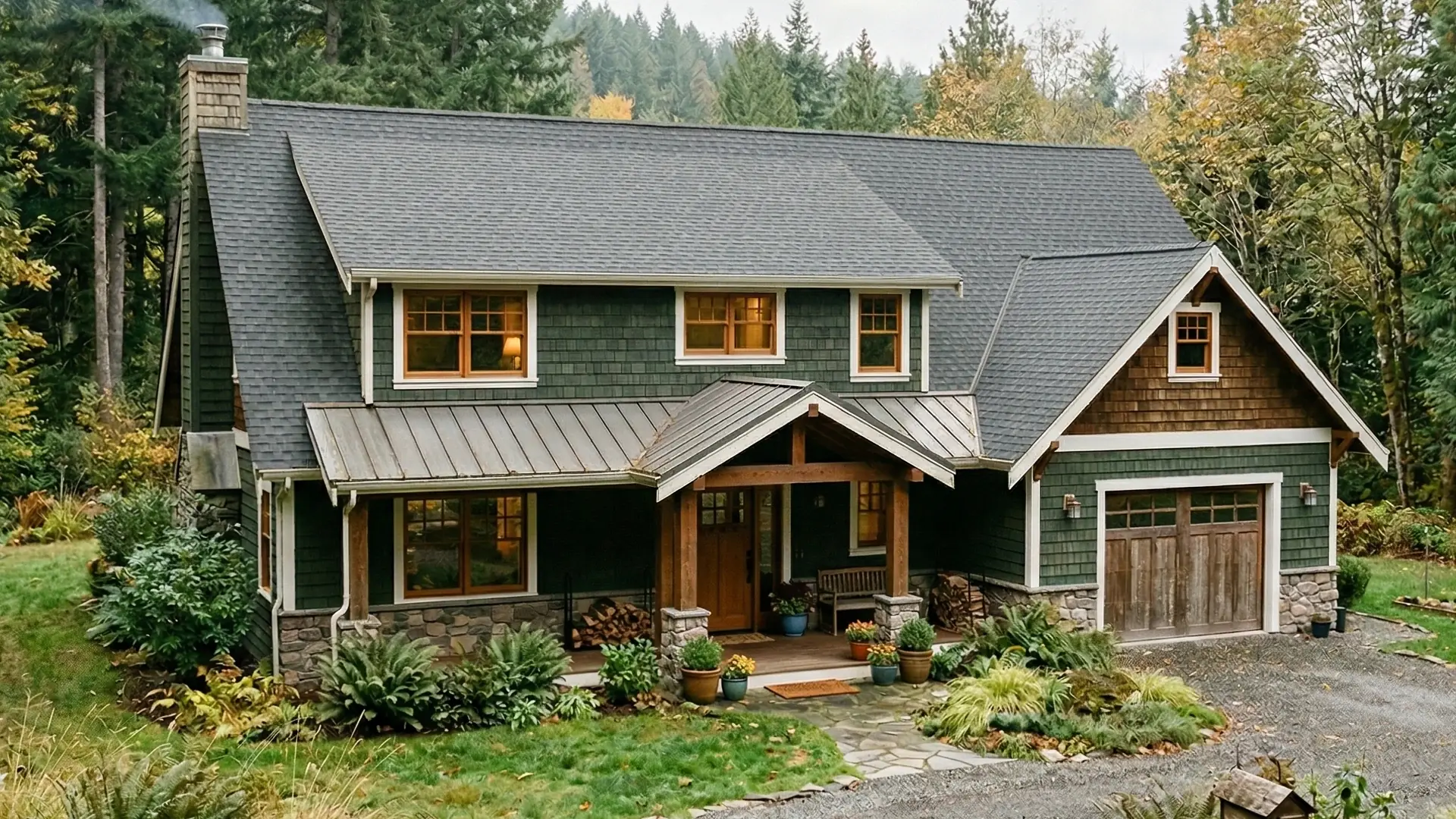
Moss on Your Roof Isn't Just Sitting There.
It's Working Its Way In.
Moss forces its way under shingles, traps moisture, and weakens the roof on its own timeline. We remove it properly before it becomes a problem you can't ignore.
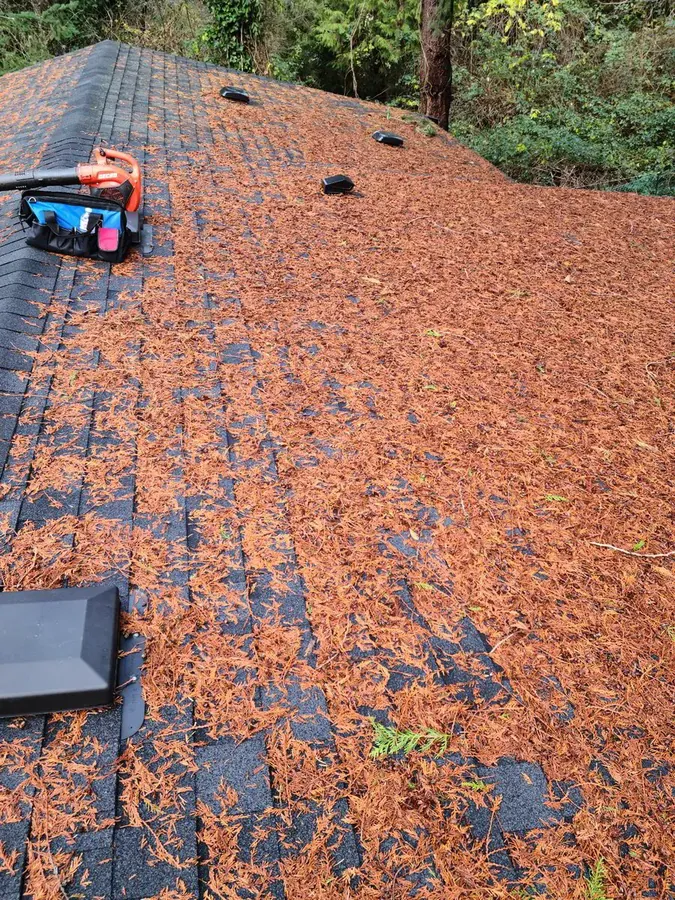
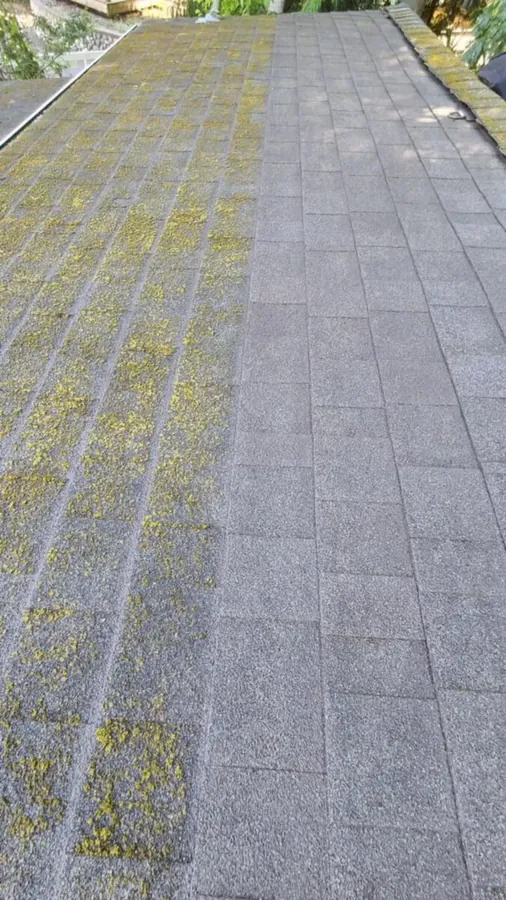
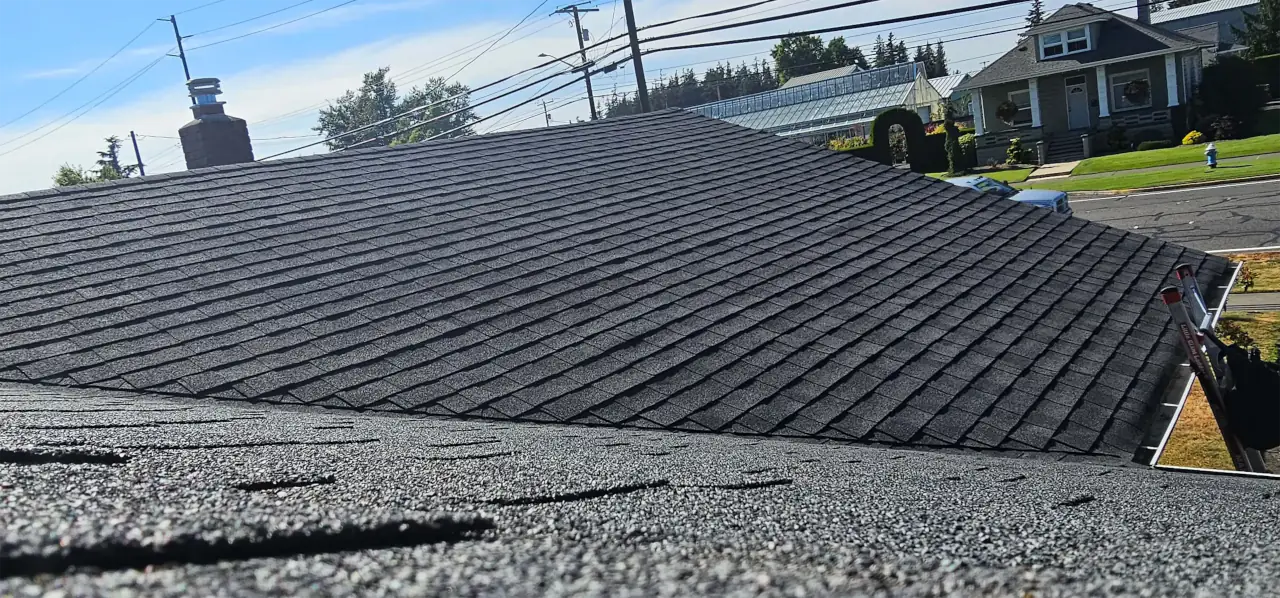
Trusted by Whatcom County homeowners
Moss Removal Isn't Cosmetic. It's Roof Protection.
A roof covered in moss looks like a maintenance problem. It is — but it's also a structural one.
Moss doesn't stay on the surface. It establishes itself at the shingle joints, works under the edges as it grows, and creates the wet, dark conditions that accelerate surface breakdown. By the time the growth is obvious from the street, it's usually been causing damage for longer than homeowners realize. Waiting another season just gives it more time to dig in.
Getting it removed early costs far less than dealing with what happens when it's left to spread. We remove what's there, treat the surface where appropriate, and give you a clear picture of what the roof actually needs going forward. If the buildup extends beyond moss to include algae, staining, and debris across the full surface, we also offer comprehensive roof cleaning that addresses the whole picture at once.
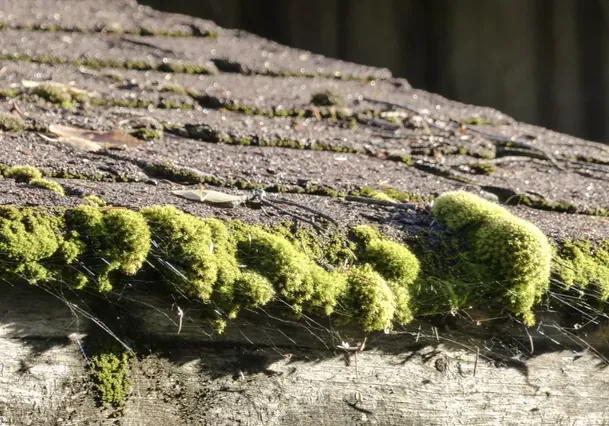
What Moss Does to Your Roof Over Time
Moss problems don't announce themselves. They build quietly through wet seasons until something makes you look up. Here's what the growth on your roof is doing right now.
Sustained Moisture Exposure
Moss absorbs water and holds it against the shingle surface long after rain stops. Instead of shedding water efficiently, your roof stays damp through extended periods between storms — repeating the saturation cycle and breaking down shingle material faster than normal weathering would on its own.
Shingles Lifting at the Edges
Moss develops root-like structures that push into the joints between shingles and work under their edges as the plant grows. This cracks the tab seals and lifts the shingle edges over time, creating gaps that give wind and driven rain a way in — exactly what shingles are designed to prevent.
Deterioration Beneath the Surface
The most expensive damage from moss is what you can't see from the ground. Water working past lifted shingles reaches the underlayment and decking, and rot in those layers doesn't make itself known until it's progressed far enough to show up on the interior. By then, a cleaning job has become a repair job.
A Shorter Roof Lifespan
Roofs under consistent moss growth don't last as long as they should. The combination of physical stress on the shingles, prolonged moisture exposure, and granule loss from surface breakdown moves the replacement timeline forward — sometimes by years — compared to a roof that's kept clean and maintained.
What Usually Prompts the Call
Most homeowners aren't thinking about the roof until something draws their attention to it. Here's what usually does.
The Moss Is Visibly Spreading
What started as a small patch has grown noticeably over the last season or two. Once moss is actively spreading across the roof surface, the growth is already established well enough to be causing damage — and letting it go further just gives it more time to dig in and widen.
The Roof Stays Shaded and Damp
Shaded roofs in high-moisture climates are exactly where moss thrives. If your roof doesn't dry out quickly after rain — which describes a lot of homes in Whatcom County — moss has the conditions it needs to establish and spread year-round. Homeowners who recognize this pattern tend to call before it gets worse.
Trying to Avoid a Bigger Repair
Some homeowners call after a roofer flags the moss during another inspection. Others have simply seen enough neighbor situations go wrong to know that ignoring it isn't a strategy. Either way, getting ahead of moss growth at the cleaning stage is far cheaper than dealing with it at the repair stage.
The Roof Looks Older Than It Is
Heavy moss changes the color and character of a roof surface. It makes a house look like the maintenance has been skipped for years — because it has. Beyond curb appeal, that visible buildup signals to buyers, appraisers, and inspectors that something needs attention. Getting it removed changes the look of the property significantly.
Removing the Moss Is Step One. Keeping It From Coming Back Is Step Two.
The conditions that grew the moss in the first place don't go away when the moss does.
Once the removal is complete, your roof is back to where it should have been. But the shade, the moisture, the direction the roof faces — none of that changes after a service call. On an untreated roof in Whatcom County's climate, moss begins reestablishing itself within a year in many locations. Getting the removal done without any follow-up puts you back at the same problem on a shorter timeline than most homeowners expect.
Prevention treatments applied after removal slow that regrowth cycle down. They're not a permanent barrier — no treatment is, and we won't tell you otherwise — but they extend the window between service calls in a way that's worth doing. For homeowners who want to stay ahead of the problem rather than chase it, adding a prevention step while the crew is already on-site is the practical choice. Pairing moss removal with an annual maintenance schedule gives you a comprehensive plan — removal handles the current problem, maintenance keeps things in check going forward.
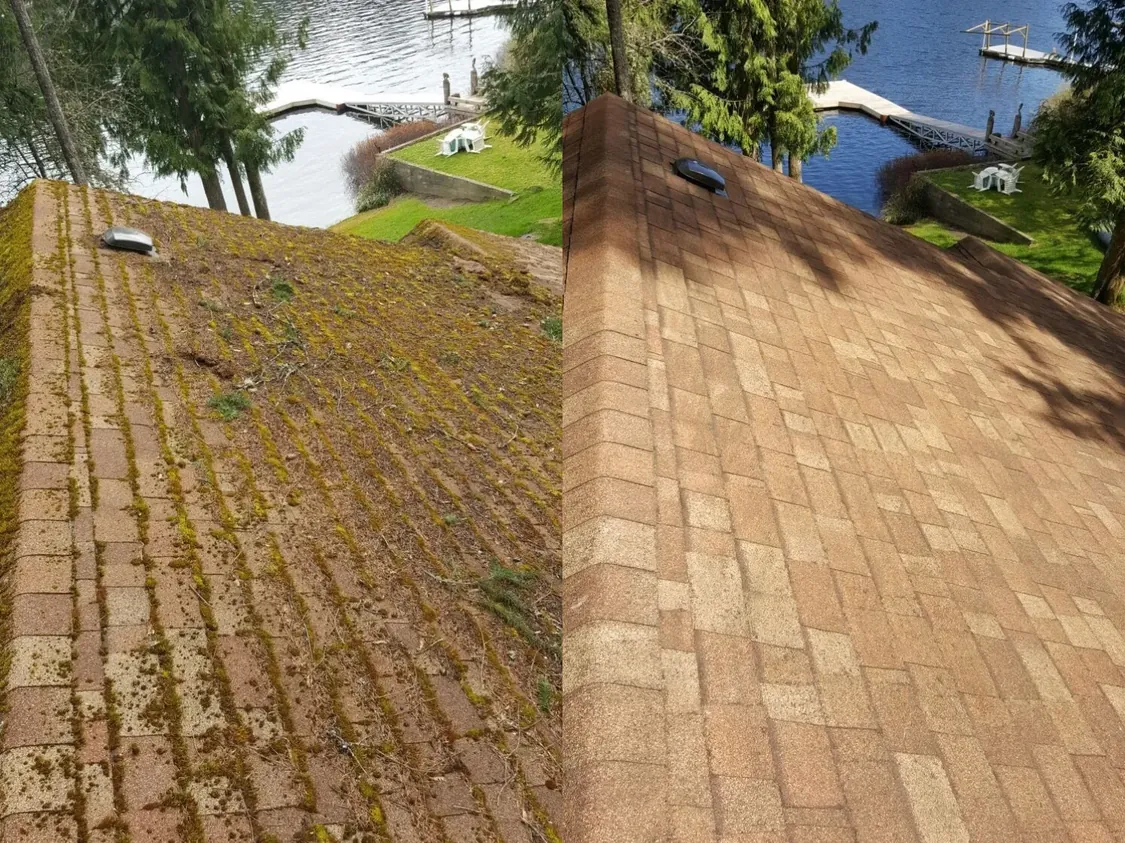
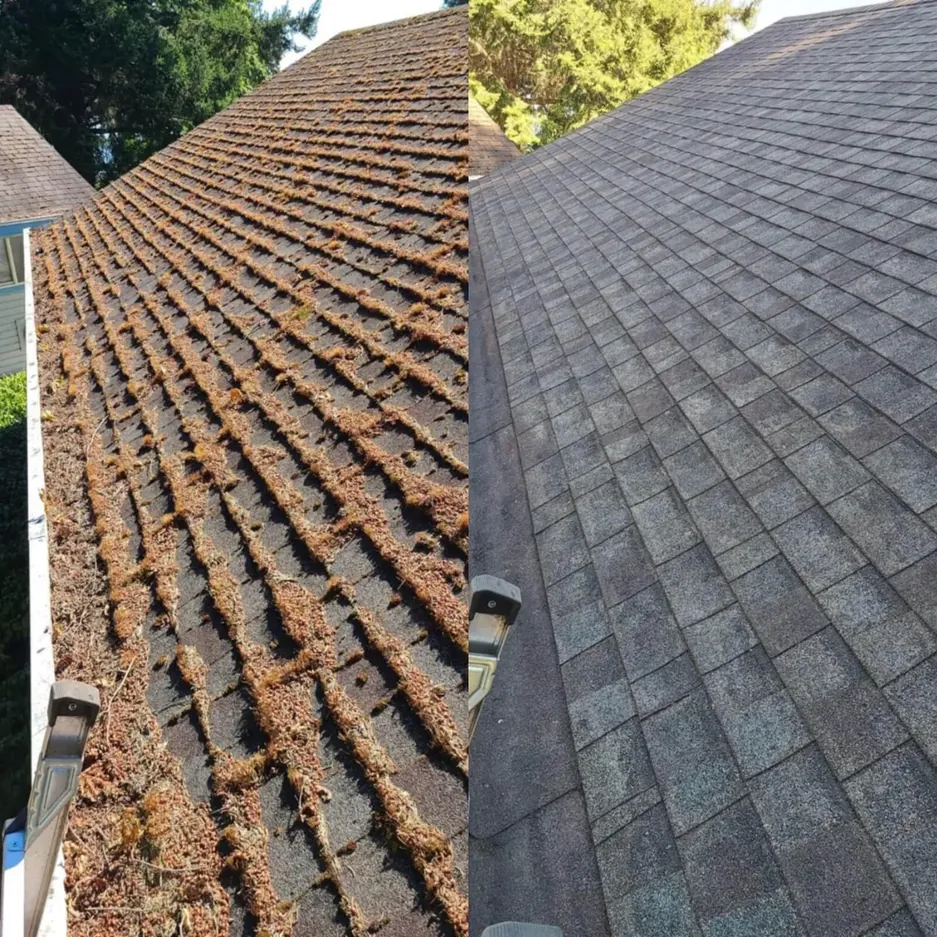
How We Handle Roof Moss Removal
The approach changes based on what's actually on the roof. Here's the consistent framework we follow on every job.
Assess the Roof and Moss Severity
Before anything is touched, we look at the extent of the growth, the condition of the shingles, and the nature of what we're dealing with. Heavy, established moss requires a different approach than a recent buildup. Skipping this step leads to the wrong method being applied to the wrong roof.
Remove Moss Based on Roof Condition
We remove moss using low-pressure methods that lift and clear the material without stripping granules or forcing debris under shingles. High-pressure washing isn't something we use — it causes damage that isn't visible in the moment but becomes clear over the months that follow.
Treat Problem Areas
After removal, we apply treatment to areas where it's appropriate — matched to the roof type and condition we're working on. We explain what we're doing and why before we start, so you're not left wondering what went onto your roof.
Clean Up and Give You a Direct Summary
We clear debris from the roof surface and gutters when the job is done, and give you a straightforward account of what we found, what we did, and anything we'd flag for your attention going forward. You leave the conversation knowing the actual state of your roof.
What Separates a Careful Job From a Fast One
Roof moss removal done poorly shows up later. We've cleaned up after it enough times to know what that looks like.
Aggressive removal methods strip granules off shingles — the protective layer that handles UV and moisture resistance — without making the damage visible in the moment. Sloppy cleanup leaves debris sitting in drainage points or pushed under shingle edges. A job that looks complete from the driveway may have created new problems that surface with the next wet season. We've seen exactly this on roofs we were called to service after someone else did it fast and cheap.
We work methodically because the roof is worth that. We explain what we found during the inspection, tell you what we're going to do before we do it, and give you an honest summary when the work is finished. If there's something on your roof beyond the moss that warrants attention — shingles in poor condition, drainage issues, anything worth knowing — we'll tell you plainly. That's what a useful service call looks like.
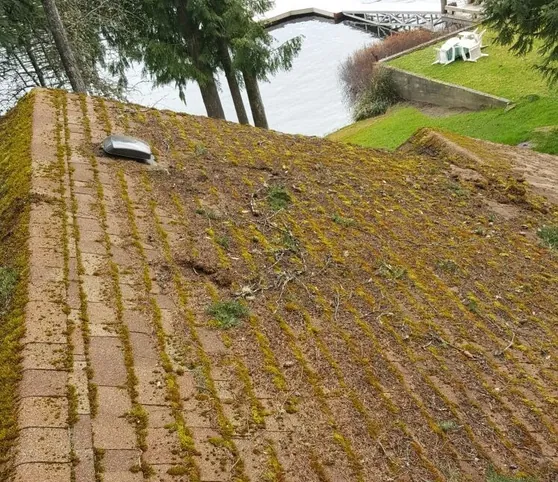
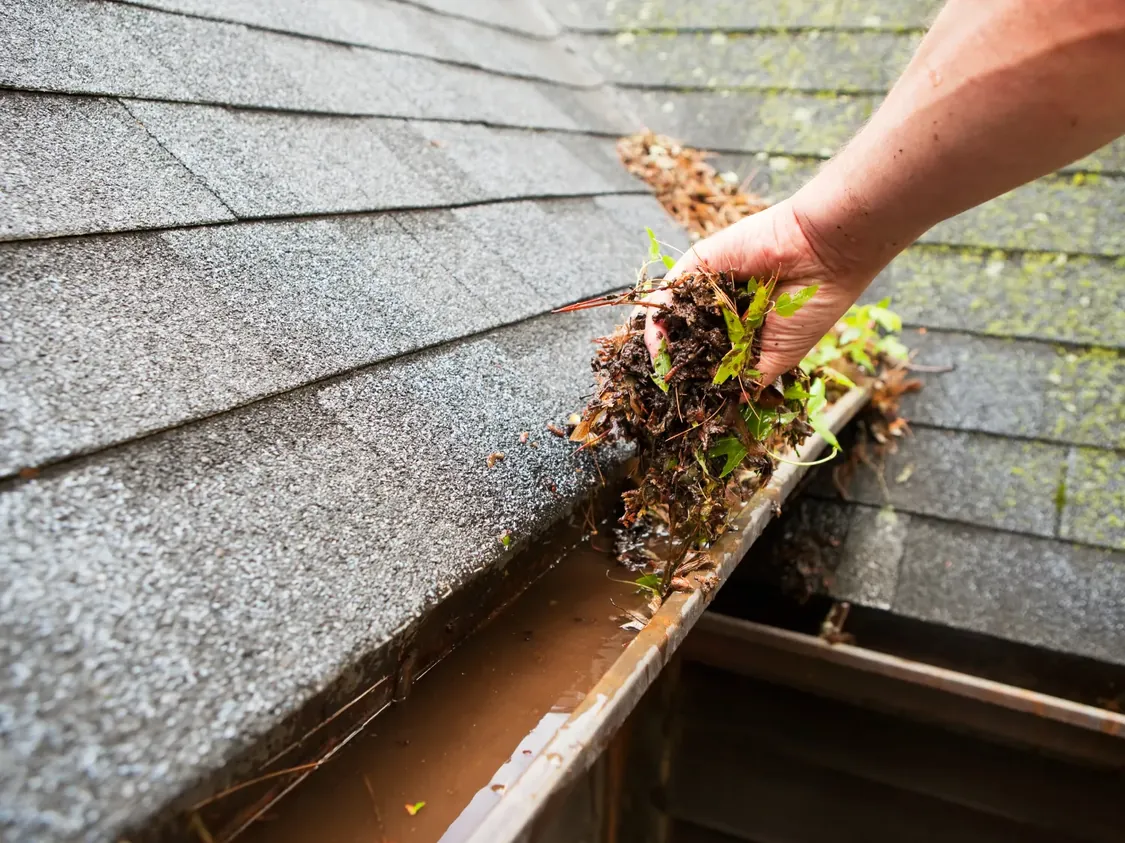
Roof Moss Removal Across Bellingham and Whatcom County
We remove roof moss throughout the region. See our dedicated pages for roof cleaning in Bellingham and moss prevention in Bellingham.
Roof Moss Removal — What Homeowners Ask
Straight answers to what we hear most often.
Yes. Moss is a living organism that grows into the surface of your roof rather than just resting on top of it. It holds moisture against the shingles, lifts their edges as it grows, and creates conditions for surface breakdown and rot in the layers below. It's not a cosmetic issue — it's a maintenance problem that gets more expensive the longer it's ignored. The earlier it's addressed, the less damage there is to deal with.
It can, and it does over time. Moss develops root-like structures that push under the shingle edges and into the joints between them, cracking the tab seals and physically lifting the shingles as it grows. Combined with the sustained moisture it holds against the surface, this accelerates granule loss and surface breakdown — both of which move the roof's replacement timeline forward faster than normal wear would.
It depends on your roof's specific conditions — how much shade it gets, which direction it faces, and how much moisture it collects. In Whatcom County, moss can return within one to two years on untreated roofs in shaded locations, which covers a large portion of homes in the area. Roofs that receive a prevention treatment after removal typically stay cleaner longer. An annual or biennial inspection is a practical approach for most homeowners here.
For most roofs in reasonable condition, yes. The cost of removal is significantly lower than the cost of repairing shingles that moss has physically compromised, or addressing the moisture damage that follows when growth is ignored long enough. Removal is maintenance — and maintenance is how you get the full lifespan out of a roof rather than replacing it ahead of schedule.
Moss can and often does return, especially in Whatcom County's moisture-heavy climate. Post-removal prevention treatments slow regrowth and extend the window between service calls, but no treatment stops it permanently. The practical goal is to stay ahead of it with periodic maintenance — keeping the moss from establishing itself and causing damage again before you're ready to deal with it. For a deeper look at the root causes, see our guide on why moss keeps coming back and what to do about it.
Yes. We work in Bellingham, Ferndale, Lynden, Birch Bay, and throughout Whatcom County. If you're unsure whether we cover your specific location, give us a call at (629) 219-8471 or submit an inspection request online and we'll confirm quickly.