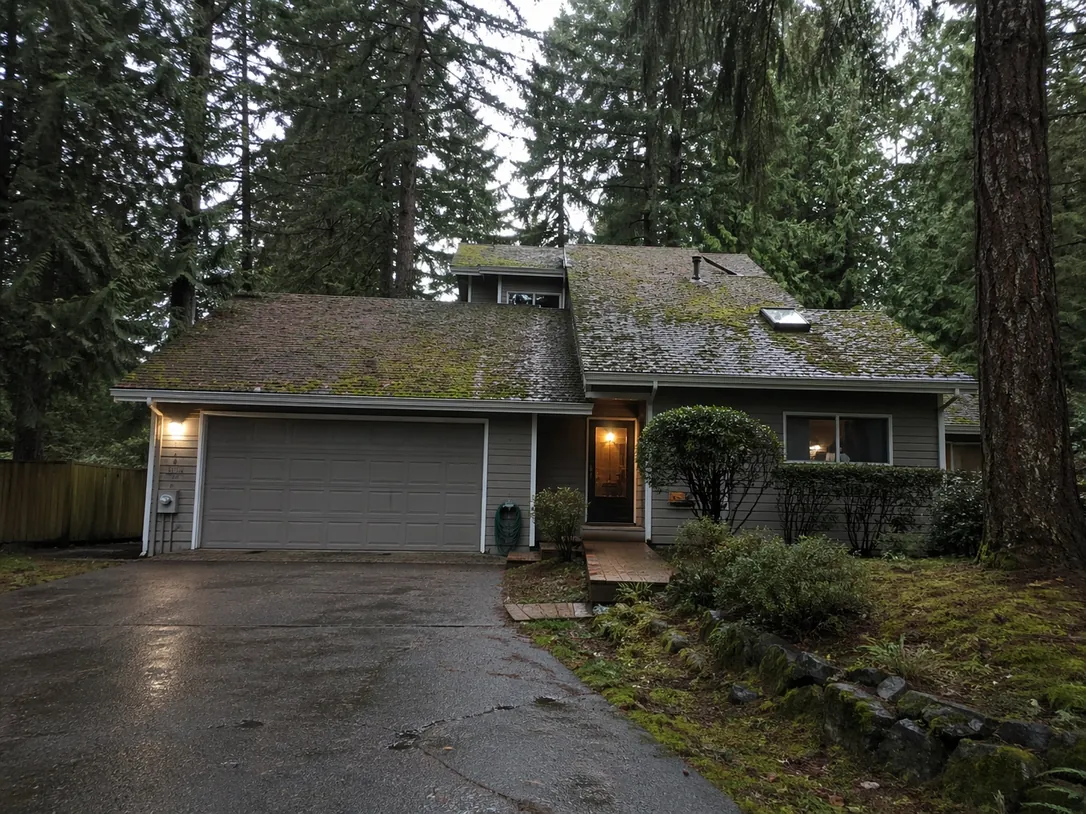
If moss seems to show up fast on roofs in Bellingham, that is because it usually does. The local mix of moisture, shade, and tree cover creates the kind of environment moss thrives in. For many homeowners, it is not a one-time issue. It is a repeating roof-care problem that gets worse when buildup is left alone too long.
Bellingham gives moss exactly what it wants. Plenty of moisture, long damp stretches, shade from trees, and roofs that do not always dry out quickly. That is why moss growth is such a common issue for homeowners here and why it tends to come back faster than people expect.
A lot of homeowners think moss is just an occasional nuisance or something that only affects older roofs. In reality, the bigger factor is the environment. When a roof stays damp and collects organic buildup, moss does not need much encouragement to start spreading.
Bellingham has the kind of conditions moss likes
Moss grows best where moisture sticks around. Bellingham has plenty of that. Wet weather, cool temperatures, and long periods without full drying create a roof environment that supports repeat growth. Even when the rain stops for a while, many roofs stay damp longer than homeowners realize.
That matters because moss does not need extreme conditions to take hold. It just needs enough lingering moisture and surface conditions that stay favorable over time. On many Bellingham homes, that is exactly what the roof provides for much of the year.
Once moss starts gaining traction, it rarely improves by itself. It usually continues building until someone addresses it.
Shade is one of the biggest reasons moss returns
Not every part of a roof grows moss at the same rate. Shaded sections almost always struggle more than areas with strong sun exposure. When a section of roof stays shaded for most of the day, it dries slower after rain and morning moisture. That slower drying time gives moss a better chance to spread.
This is especially common on north-facing slopes or on homes surrounded by tall trees. Even if one side of the roof looks relatively clear, another section may already be holding enough dampness to support visible growth.
That uneven pattern is one reason homeowners sometimes underestimate the problem. They may only notice the worst section once the moss is already well established.
Tree cover makes the problem worse
Bellingham neighborhoods with heavy tree cover often deal with faster moss buildup for two reasons. First, trees create more shade. Second, they drop needles, leaves, and organic debris that collect on the roof. That debris holds moisture against the surface and gives moss a better environment to come back.
It is not just the debris itself that causes trouble. It is what that debris does over time. Roof valleys, lower edges, and transition points can collect organic material that stays wet long after the weather has cleared. Those are the exact kinds of spots where moss tends to show up and spread first.
Homes near evergreens often see this pattern repeatedly. The roof may get cleaned, then slowly begin collecting the same damp material again if it is not maintained.
Slow drying is a bigger issue than most homeowners realize
A roof does not need standing water to have a moisture problem. It just needs to stay damp longer than it should. That is one of the biggest reasons moss grows so fast in this area. The roof may not look obviously wet from the ground, but if it is drying slowly day after day, moss has time to establish itself.
This often happens when multiple factors stack together. Shade limits direct sun. Debris blocks airflow. The weather stays cool. Gutters collect runoff and reduce proper drainage at the roof edge. None of these factors need to be dramatic on their own. Together, they create the kind of roof environment moss likes.
That is why homeowners who wait for obvious overgrowth are usually reacting late. The conditions feeding the moss were already there well before the roof started looking bad.
Moss is not just a cosmetic issue
Many people first notice moss because it makes the roof look neglected. But the bigger issue is that moss traps moisture on the roof. It adds to the damp conditions that allowed it to grow in the first place, which means the problem can feed itself over time.
That is what makes moss different from a simple appearance issue. It is part of a larger moisture problem sitting on top of the house. The longer it stays in place, the more time it has to keep the roof surface wet and contribute to ongoing wear.
That is why roof moss removal matters. It is not just about making the roof look cleaner. It is about interrupting the conditions that let the problem keep getting worse.
Why some Bellingham roofs get hit harder than others
Even within the same city, some homes deal with moss much faster than others. A roof with open sunlight and less tree coverage may stay drier and show less buildup. A home tucked under dense trees or in a shaded area may fight repeat moss growth much more often.
Roof design can also make a difference. Valleys, lower slopes, and sections that naturally catch debris often become trouble spots first. Homes with recurring gutter clogs may also see more edge-related moisture problems that contribute to buildup around the roofline.
This is why there is no universal moss timeline that applies to every house. The speed of growth depends on how that specific property handles moisture, shade, and debris over time.
Cleaning helps, but prevention matters too
Once moss is established, cleaning the roof is the first step. It deals with the growth that is already there and helps restore better roof conditions. But on many Bellingham homes, cleaning alone is not enough if the roof goes right back to the same damp, debris-heavy environment afterward.
That is where roof moss prevention and ongoing roof maintenance become important. Cleaning handles the immediate problem. Prevention helps reduce how quickly it comes back. Those are not competing services. They are two parts of the same long-term roof-care plan.
For homes in heavy shade or near constant tree debris, that kind of maintenance often makes more sense than waiting through another full growth cycle.
The smarter move is staying ahead of the cycle
Bellingham roofs deal with the kind of environment that makes moss a repeat problem. That is not something homeowners can change completely, but it is something they can manage. The worst approach is usually ignoring the roof until the moss is obvious from the street.
The better approach is to deal with buildup early, keep debris from piling up, and treat roof care like maintenance instead of a once-in-a-decade cleanup. That helps homeowners avoid heavier growth, more difficult cleanups, and the same problem coming back unchecked year after year.
Moss grows fast on Bellingham roofs because local conditions make it easy. The goal is not pretending those conditions do not exist. It is staying ahead of them before the roof gets overwhelmed. Get in touch if you want us to take a look at your property and put a practical plan together.
Moss grows fast on Bellingham roofs because the local environment gives it a head start. Damp weather, shade, tree cover, and slow drying all work together to make repeat growth more likely. The practical solution is not waiting for the roof to get overrun. It is handling buildup early and staying ahead of the conditions that feed it.
Thinking about your roof?
Free inspections across Bellingham and Whatcom County. No pressure, no hard sell — just an honest look at what your roof needs.
Request a Free Inspection